How Much Water Should You Store Per Person?
A simple rule-based guide to calculate how much water your household needs for emergencies.
Quick answer
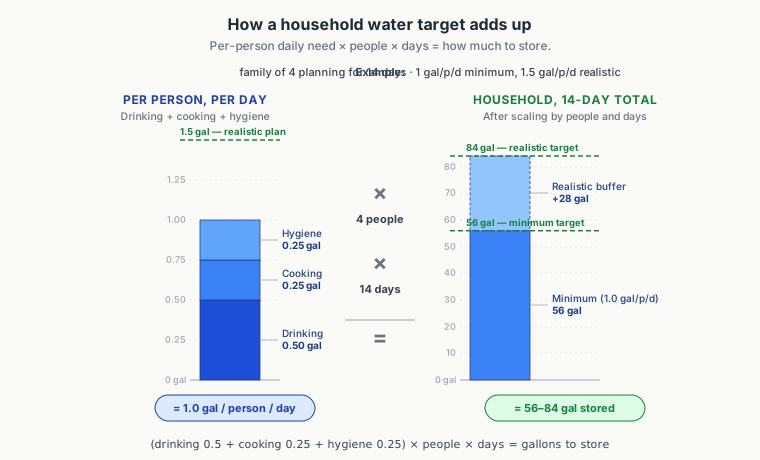
A more practical planning target is 1.5 gallons per person per day, which includes drinking, cooking, and basic hygiene. Aim for a minimum of 7 days' supply; 14 days is a much stronger buffer.
Quick planning table, gallons to store
| People | 3 days (min) | 7 days (min) | 14 days (min) | 14 days (realistic 1.5 gal) |
|---|---|---|---|---|
| 1 | 3 gal | 7 gal | 14 gal | 21 gal |
| 2 | 6 gal | 14 gal | 28 gal | 42 gal |
| 3 | 9 gal | 21 gal | 42 gal | 63 gal |
| 4 | 12 gal | 28 gal | 56 gal | 84 gal |
| 5 | 15 gal | 35 gal | 70 gal | 105 gal |
Factor in pets, climate, and medical needs with the Emergency Water Needs Calculator.
What the 1 gallon/day covers
The 1 gallon per person per day figure is a survival baseline, enough for a sedentary adult to drink and do the minimum. Here's what that gallon actually needs to cover:
- Drinking: ~0.5 gal per day (more in heat or with physical exertion)
- Food preparation: ~0.25 gal (rehydrating dried foods, minimal cooking)
- Basic hygiene: ~0.25 gal (hand washing, oral hygiene)
Dish washing, bathing, laundry, and flushing (unless you're on a septic or well system) are not included in this figure, those require municipal services or much larger stored volumes.
When you need more than the minimum
- Hot weather and physical activity: Adults working outdoors in summer heat need 1.5–2+ gallons per day just for drinking. Dehydration risk is real and fast-moving in heat.
- Infants and young children: Formula mixing requires clean water. Budget similarly to adults for planning simplicity.
- Nursing mothers: Require approximately 0.5 gallon per day above the baseline.
- Pets: A medium dog needs ~0.5 gal/day; a cat ~0.1 gal/day. Include them, they're often forgotten until the emergency starts.
- Medical needs: Anyone on dialysis, with kidney issues, or requiring extra hydration should plan above the baseline.
- Cooking-heavy food supply: If your emergency food relies on dried grains, beans, and pasta, budget extra for cooking water, easily another 0.5 gal/day for a family of four.
Storage options by scenario
- 1–3 days: A few cases of commercial bottled water are sufficient and require no special preparation. Store in a cool location away from sunlight.
- 3–14 days: Food-grade 5-gallon stackable jugs are the most practical option. Lightweight individually when empty, manageable when full (~42 lbs), and widely available at outdoor and hardware stores.
- 14 days and beyond: A 55-gallon food-grade barrel uses about 3 sq ft of floor space and provides most of a 14-day supply for a family of four in a single container. Requires a hand pump or siphon to use. Best for basements or garages with stable temperatures.
- Bathtub bladders (WaterBOB): 100-gallon bladders that fill your bathtub with tap water just before an event. Excellent supplement but only works if you fill them before the water goes out.
Storage tips
- Use food-grade containers only: HDPE plastic containers marked with a recycling symbol #2 are appropriate. Never store drinking water in containers previously used for chemicals, cleaning products, or fuel.
- Keep cool and dark: Ideal storage temperature is 50–70°F. Avoid hot garages, attics, or anywhere that sees summer temperature extremes. Heat doesn't make stored water dangerous but accelerates breakdown of lower-quality plastic containers.
- Rotate every 6–12 months: Commercially sealed water lasts 2+ years. Tap water in food-grade containers should ideally be refreshed annually, or treated with 1/4 tsp of unscented household bleach per gallon to extend shelf life.
- Label with fill date: Mark every container. You need to know how old it is when you audit your supply.
Backup water sources for extended emergencies
Stored water covers 3–14 days. For longer disruptions, you need a strategy for additional sources:
- Rainwater collection: Even a basic 50-gallon rain barrel on a downspout gives you a significant supplemental source. A 1,000 sq ft roof collecting 1 inch of rain can yield 400–500 gallons.
- Water filtration: Gravity-fed ceramic filters (Berkey, Doulton) or hand-pump filters (Sawyer, Katadyn) can make surface water, well water, or collected rainwater drinkable. Essential for any extended preparedness plan.
- Purification tablets: Potable Aqua or Aquatabs for treating individual portions. Slow (30 min wait), slightly chemical taste, but extremely lightweight and portable.
- Boiling: 1 minute at a rolling boil kills all biological pathogens. Effective and free but requires fuel.
Simple takeaway
Start with 1 gallon per person per day as a baseline, plan realistically at 1.5 gallons, and aim for at least a 7-day supply, ideally 14 days. Use 5-gallon stackable jugs or a 55-gallon barrel, store cool and dark, rotate annually, and combine stored water with a filtration system for extended emergency readiness.