How to Store Water Long-Term for Emergencies
What to store it in, how much to store, how to keep it safe over time, and when to rotate your supply.
Quick steps
- Plan 1 gallon per person per day, minimum. Aim for 7 days (28 gal for a family of four). Beyond 14 days, combine storage with a filter and backup sources.
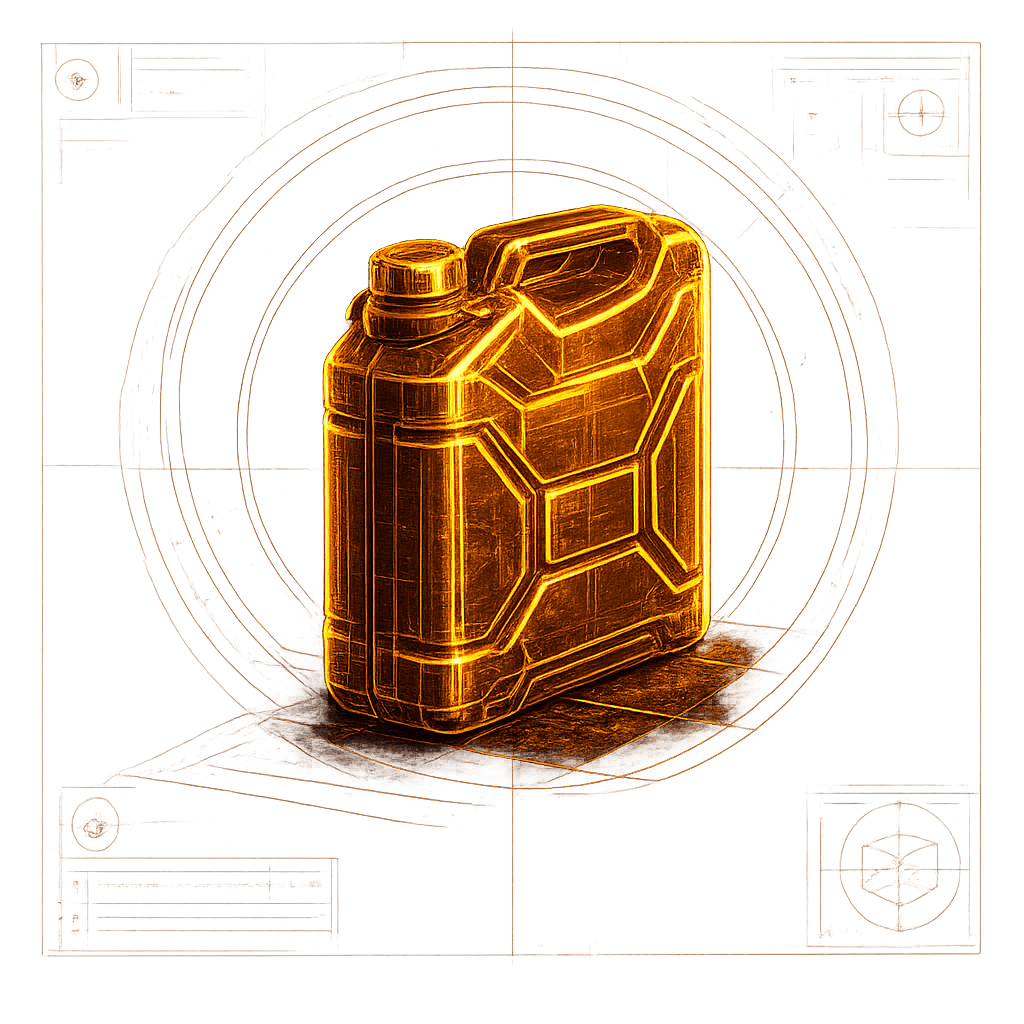
- Use food-grade HDPE (#2) containers. 5-gallon stackable jugs or 55-gallon barrels. Avoid milk jugs, juice bottles, or anything not rated food-grade.
- Sanitize used containers before filling. Wash with dish soap, then swirl 1 tsp unscented bleach per quart of water inside. 30-second contact, pour out, let air-dry, don't rinse.
- Fill from clean municipal tap water. If you're on a private well, add 1/8 tsp unscented bleach per gallon before sealing.
- Seal, label with fill date, store cool and dark. Off concrete (use a pallet), away from gasoline and chemicals, and somewhere you'll actually see and rotate it.
- Rotate tap water every 6-12 months. Commercial bottled water lasts to its printed date. Use older containers in routine cooking or watering, then refill.
How much water to store
FEMA and the Red Cross both recommend a minimum of one gallon of water per person per day, enough for drinking and basic sanitation. That's a floor, not a target. People who are physically active, live in hot climates, are pregnant, or are ill may need two gallons or more per day. Pets need water too.
For a family of four, a practical emergency supply looks like this:
- 3-day minimum: 12 gallons (fits in a few 5-gallon jugs)
- 7-day recommended: 28 gallons
- 14-day serious preparedness: 56 gallons
- 30-day extended supply: 120 gallons
The 7-day mark is a reasonable goal for most households. Beyond two weeks, a combination of stored water, a filtration system, and knowledge of backup sources (like rainwater collection) becomes more practical than trying to store everything.
Choosing the right containers
Container choice matters more than people realize. The wrong container can leach chemicals into your water, crack over time, or allow contamination.
- Food-grade HDPE plastic (marked #2): The gold standard for most households. Available as 5-gallon stackable jugs, 7-gallon Aqua-Tainers, or large 55-gallon barrels. Durable, widely available, and inexpensive.
- Commercially bottled water: Convenient and pre-sealed, but expensive per gallon and generates significant plastic waste. Fine for a short-term or supplemental supply.
- WaterBOB bathtub bladder: A large plastic bladder that fills from your bathtub faucet before or during a disaster. Holds up to 100 gallons and costs around $30. Not for permanent storage, but excellent for last-minute top-up before a hurricane or storm.
- Stainless steel: Safe and durable, but heavy and expensive at scale. Best for smaller quantities.
Avoid: containers that previously held non-food products, thin plastic bags, glass at scale (heavy and breakable), and anything not rated food-grade. Do not use regular juice or milk containers, milk residue promotes bacterial growth even after cleaning, and both types degrade faster than purpose-made water storage containers.
Preparing and filling containers
New food-grade containers should be rinsed with clean water before use. Used containers (even food-grade ones) need more thorough preparation:
- Wash with dish soap and hot water. Rinse completely.
- Sanitize by swirling a solution of 1 teaspoon of unscented liquid chlorine bleach (5–9% sodium hypochlorite) per quart of water around the inside of the container, making sure the solution contacts every surface.
- Let sit for 30 seconds, then pour out and let air dry, do not rinse after sanitizing.
- Fill with tap water from a clean municipal source. Municipal tap water is already treated and safe to store directly.
- Seal tightly, label with the fill date, and store.
If you're on a private well, your water should be tested and treated before storage. Add 1/8 teaspoon of unscented bleach per gallon of water before sealing.
Where to store your water
Location has a significant effect on how long stored water stays safe and how well containers hold up over time.
- Cool and dark: Heat accelerates chemical leaching from plastic and promotes algae growth if any light gets in. Basements, interior closets, and climate-controlled spaces are ideal.
- Off direct concrete: Concrete floors can transfer petroleum compounds and temperature fluctuations into plastic containers. Use a pallet, wooden boards, or shelving.
- Away from chemicals: Gasoline, pesticides, cleaning products, and paint emit vapors that can permeate thin plastic containers. Keep your water storage physically separate from these items.
- Accessible, not forgotten: Store water somewhere you'll actually notice it and rotate it. The back corner of a crawl space is not a good choice.
How long does stored water last?
Stored water doesn't "expire" in the way food does, water itself doesn't go bad. What changes over time is the container (plastic can leach) and the treatment (chlorine dissipates). FEMA recommends replacing stored tap water every six months as a general guideline. Commercially sealed bottled water can be safely used well beyond its printed date, though flavor may change.
- Tap water in sealed food-grade containers: 6–12 months before rotation is recommended
- Tap water treated with additional bleach: Up to 1 year
- Commercially bottled water (unopened): 1–2 years printed date, safe indefinitely if stored correctly
- Water stored in 55-gallon drums: 1–5 years with proper treatment and sealed storage
How to rotate your water supply
Rotation doesn't have to mean dumping and refilling everything at once. The simplest system is to mark your containers with a fill date and work through your oldest supply first, refilling as you go. For most households, once or twice a year is sufficient.
Old stored water that isn't obviously contaminated is still perfectly usable for watering plants, flushing toilets, or washing. You rarely need to waste it.
Water treatment and purification
If you're ever unsure whether your stored water is still safe, or if you're drawing from an emergency source like a stream, lake, or collected rainwater, treatment is essential before drinking.
- Boiling: The most reliable method. Bring water to a rolling boil for 1 minute (3 minutes above 6,500 ft elevation). Kills bacteria, viruses, and parasites.
- Unscented liquid chlorine bleach: Add 1/8 teaspoon (8 drops) per gallon of clear water. Double for cloudy water. Wait 30 minutes before drinking. Effective against bacteria and most viruses.
- Water purification tablets: Convenient for emergencies. Follow package directions. Iodine tablets work well but leave a taste; chlorine dioxide tablets are more effective and tasteless.
- Gravity filters (e.g., Berkey, Sawyer): Excellent for long-term or high-volume situations. Can process hundreds of gallons and remove bacteria, parasites, and many chemicals. Not a replacement for treatment against viruses without a specific filter.
Don't forget about water for other uses
The 1-gallon-per-person-per-day rule covers drinking and basic hygiene only. In a real extended emergency, water needs expand:
- Cooking and food preparation
- Flushing toilets (if sewer is still functional but water is off)
- Pet and livestock needs
- Medical care and wound cleaning
- Laundry and general sanitation
Planning for the full picture rather than just drinking water is what separates adequate preparedness from good preparedness. For extended scenarios, knowing your backup sources, stored rainwater, neighborhood water points, a nearby stream with a filter, matters as much as what you have on your shelves.
Simple takeaway
Start with a week's supply (28 gallons for a family of four) in sealed, food-grade containers stored somewhere cool and dark. Label them, rotate every 6–12 months, and keep a filter or treatment method on hand for backup. Water storage is one of the highest-return preparedness investments you can make, the cost is low and the benefit in an emergency is enormous.